
Who is Viktoria Laskina?
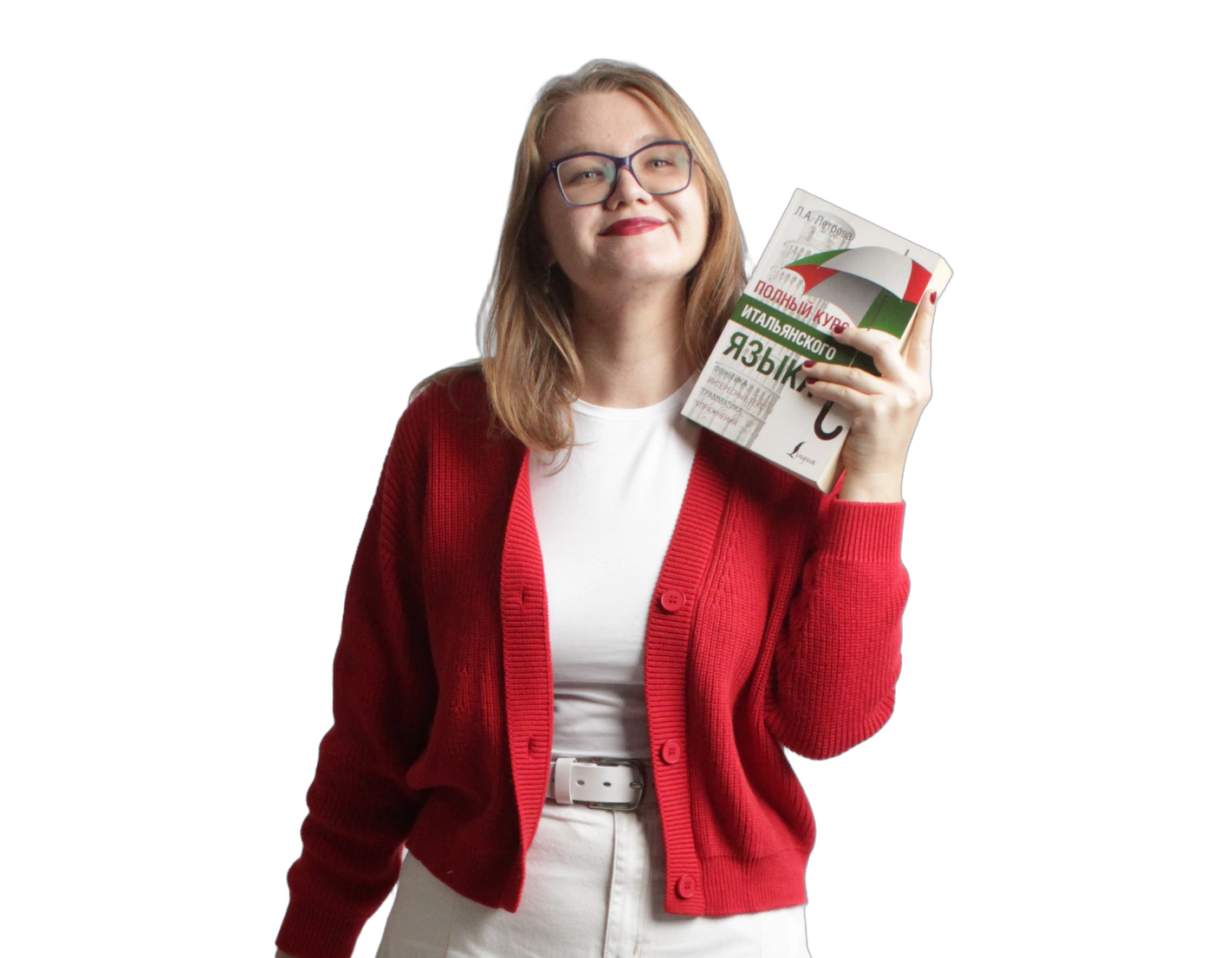
- Born in
- Mordovia, Russia
- Based in
- Verona, Italy
- Teaching since
- 2018
What is my background in languages and linguistics?
I graduated cum laude in Foreign Languages from Mordovia State University, where Italian was one of the languages I studied. I later completed a master’s degree in Linguistics at the University of Verona with 110 cum laude and also studied German there. Learning several languages through university courses, private tutoring, independent study, apps and everyday life helps me evaluate different methods from a student’s perspective as well as a teacher’s.
How many languages do I speak?
I speak six languages at different proficiency levels. My native languages are Russian and Erzya, a Mordovian language, and I also speak English at C2, Italian at C1, German at A2 and French at A1. I am currently studying French with a private tutor.
-
Russian
NativeRussian is my native language.
-
Erzya
NativeErzya is one of my native languages, alongside Russian. It is part of my linguistic and cultural background in Mordovia.
-
English
C2I learned English at university in Russia and Italy.
-
Italian
C1I studied Italian during my bachelor's degree and later at the Università di Verona.
-
German
A2I studied German at Mordovia State University and the Università di Verona.
-
French
A1I’m currently learning French with a tutor who shares my practical, conversation-led approach, and I bring that fresh experience back to my own students.
Which language certificates do I hold?
I hold an Italian C1 proficiency certificate and an English C2 certificate, both awarded by the Università di Verona, as well as an IELTS C1 certificate in English.
-
Italian C1 Certificate
Proficiency certificate awarded by the Università di Verona.
-
English C2 Certificate
Proficiency certificate awarded by the Università di Verona.
-
IELTS C1 Certificate
English-language proficiency certified through IELTS.
Why did I become an Italian teacher?
I became an Italian teacher for the same reason I fell in love with the language, which is love for Italy, for the Italian language and Italian culture. After studying it as a foreign language and later moving to Verona, it became part of my education, daily life and work.
My interest in linguistics also made me curious about how grammar, sound and meaning become real communication. Teaching lets me help students make that same transition from studying Italian to using it.
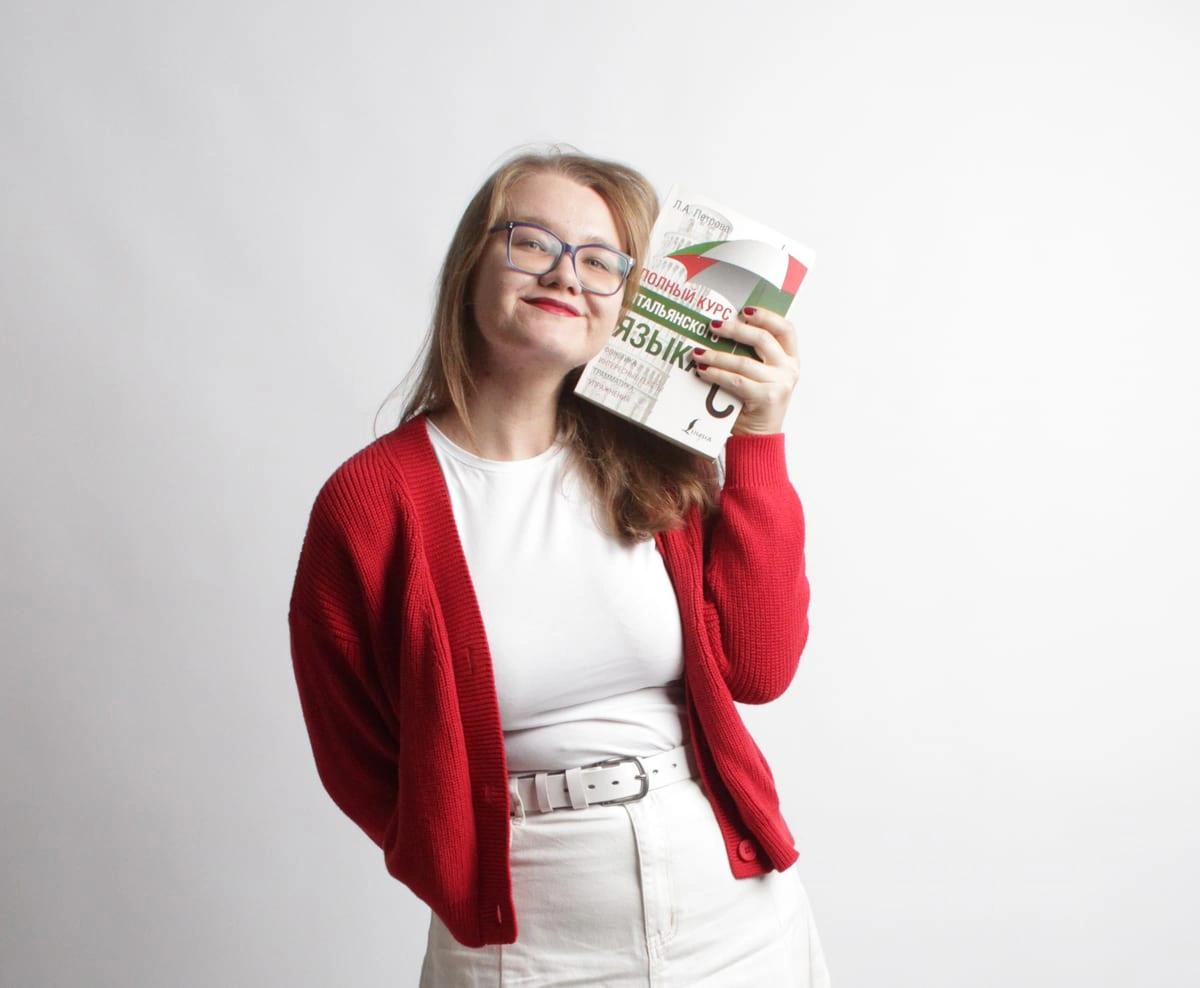
When did I start teaching languages?
I have taught languages since 2018. I began as an English schoolteacher in Russia, then as a private online English tutor, and I started teaching Italian in 2023. The timeline below shows the path I took to become an online Italian teacher.
-
Since 2018
Freelance English tutor
Online
Learners of all ages, from A0 to B2, with personalised, communicative and speaking-first lessons, as well as exam and university-admission preparation.
-
2020–2022
English teacher & class coordinator
School No. 30, Saransk (Russia)
Teaching grades 2–11 with interactive materials and modern language-teaching practices.
-
2021–2022
English tutor at Yandex Practicum
Online
A0–B2 learners on an interactive platform, developing speaking from the very first lessons.
-
Since 2023
Freelance Italian tutor
Online
Learners aged 16 and over, from A0 to B1, are at the heart of my work today, with personalised, speaking-first Italian.
How do I teach Italian online?
My approach puts speaking first, so we begin using Italian in the first lessons even if you only know a handful of phrases, because fluency grows through use. You do not have to wait until you feel ready to speak, since speaking itself is part of how you become ready.
Lessons are patient and relaxed, with enough playfulness to keep them from becoming boring, and mistakes are never treated as something embarrassing. Instead, they show me what we need to work on and are often the most useful thing you can bring to a lesson, while music, films, videos and games keep our work connected to the Italian people actually use.
I explain in the language that helps you most, whether that is English, Russian or Italian, and gradually bring more Italian into the lesson as your level grows. Although a coursebook gives us a useful structure, it never dictates the whole lesson, because I adapt the activities, examples and pace to you.
See how online Italian lessons workWhat can you expect from my Italian lessons?
These are the principles I use when planning and teaching each lesson.
How is learning with me different from using an app?
A language app can be a useful warm-up and a way to find out whether you really want to learn Italian, but its fixed path mainly helps you practise and recognise patterns. Because an app cannot hear how you use the language or respond to what happens in a conversation, my lessons add live conversation and personal feedback, allowing me to correct your Italian in context and adapt each activity to your progress. This keeps our work tied to your goals and helps you use Italian with confidence in the situations that matter to you, following a plan that changes as you do.
Learning Italian with apps
The downsides of language learning apps are listed below.
- Follows the same path for everyone, whatever your level.
- Can't hear your pronunciation in a real conversation.
- Lets you practise, but doesn't prepare you to communicate spontaneously.
- Doesn't change method when your goals change.
- Doesn't notice when you need motivation or a different approach.
Learning Italian with me
The advantages of learning Italian with me are listed below.
- Every lesson is built around your level, your goals and the way you learn.
- I correct pronunciation, grammar and naturalness as you speak.
- You have real conversations from the very first lesson.
- Your path evolves with your progress and your needs.
- I know your strengths and your struggles, so every lesson starts from where you left off.
Why do I teach Italian from A0 to B1?
I teach Italian from complete beginner (A0) to intermediate (B1), because this early part of the journey is where a patient, structured teacher can make the greatest difference and where my method, materials and trilingual explanations can help you most. Beyond B1, constant practice and daily contact with real Italian become more useful than general lessons with a teacher, so my role is to bring you solidly to that level and prepare you to keep growing through conversations, media and everyday use on your own.
Explore lessons & levelsThe range I teach
A0
A1
A2
B1
Beginner → intermediate, across every format I offer.
Why are my Italian lessons focused on speaking?
My lessons are focused on speaking because you cannot learn Italian without speaking and practising it. Understanding every grammar rule on paper does not prevent you from freezing when you need to say something aloud. Grammar is surely an important aspect of language learning, but many learners get stuck in that gap between knowing Italian and being able to use it. This is the gap I most want to help you close.
We therefore start speaking in the first lesson, even if you can only use a few simple phrases, so that your brain, ear and mouth begin learning together. This early practice turns passive knowledge into something you can use and makes mistakes feel less frightening over time, while grammar and vocabulary become easier to remember once they are part of real speech.
See a lesson's rhythmBenefits of focusing on speaking
The benefits of focusing on speaking are listed below.
- You use Italian from your very first lesson.
- Your listening and pronunciation improve together.
- Passive knowledge becomes active, usable language.
- You start thinking in Italian instead of translating in your head.
- Speaking can begin to feel less intimidating.
- Speaking quickly shows us exactly what to practise next.
- You gain real confidence for real conversations.
How did I learn Italian as a foreign language?
I learned Italian as a foreign language through academic study, independent practice and immersion, beginning with the Italian courses in my bachelor’s degree in Foreign Languages. Afterwards, I continued on my own, using resources such as Duolingo to practise regularly and explore the language beyond my university courses.
My learning became more structured when I began taking regular lessons with a private tutor, and after moving to Italy in 2022, I completed a language course and attended several courses taught in Italian. Living in Verona has since made the language part of my everyday life, because I use it constantly, hear it in different contexts and keep learning through conversations, work, media and daily experiences. The timeline below follows this journey in five stages.
-
Bachelor's degree
University foundations
Italian was one of the languages I studied during my degree in Foreign Languages.
-
After university
Independent learning
I continued studying independently, using Duolingo and other resources to practise and explore the language.
-
2020–2022
Structured study with a private tutor
I studied regularly with a private tutor, strengthening my grammar and vocabulary while gradually becoming more confident in speaking Italian.
-
From 2022
Studying in Italy
After moving to Italy, I completed a language course and attended several courses in Italian.
-
Today
Living the language
Living in Italy gives me constant immersion through everyday conversations, work, culture and media.
How do I keep my language level up?
Here's what I do to keep my language level up.
- Living in Verona keeps Italian switched on all day.
- I read, watch and listen in Italian and English.
- I teach in Italian, English and Russian every week.
- I stay curious, always chasing a new word or a strange etymology.
Did I use language apps to learn Italian?
Yes, after studying Italian during my bachelor’s degree I used Duolingo as one part of my independent practice before taking regular lessons with a private tutor. The Duolingo app was useful to get the hang of the language, but it never got me speaking or thinking in Italian on its own. So, I see apps like Duolingo as a warm-up and not as a tool that can actually teach you Italian. Experiencing that limit myself is one reason I give students live conversation, individual feedback and lessons that respond to what they need.
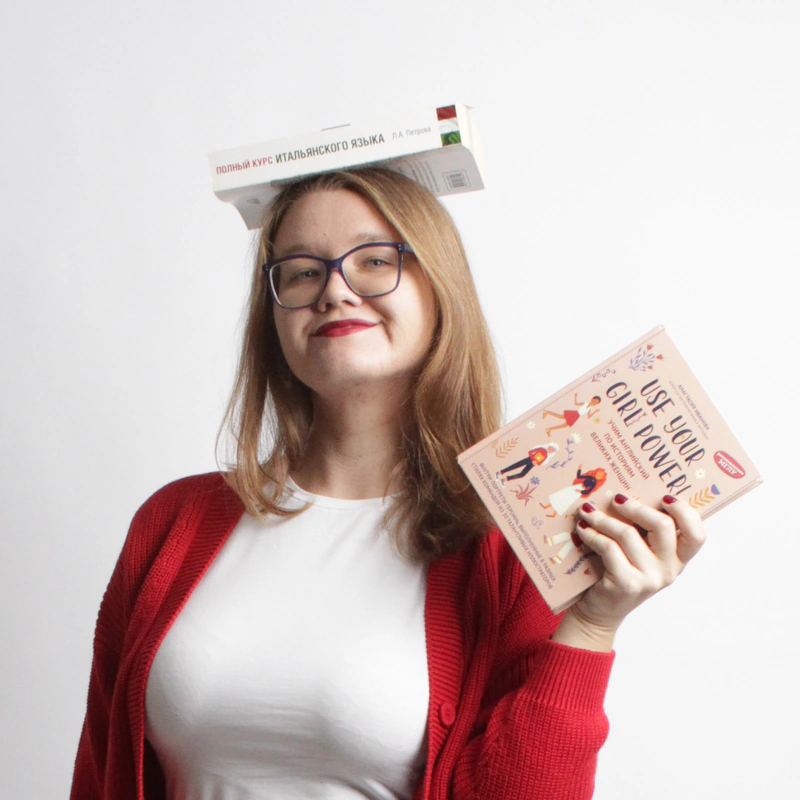
How can you contact me about Italian lessons?
The quickest way to reach me is a direct message on Telegram, where you can tell me your level, your goals and whether you would prefer explanations in English, Russian or Italian. We can take it from there. If you don't have Telegram, you can email me from the contact page.
Which values guide my teaching?
The values and principles that guide my teaching are listed below.
Which language-related quotes inspire me?
My favourite quotes are listed below.
If you talk to a man in a language he understands, that goes to his head. If you talk to him in his own language, that goes to his heart.
He who knows no foreign languages knows nothing of his own.
Learning another language is not only learning different words for the same things, but learning another way to think about things.
What do I enjoy outside teaching?
My hobbies outside work are listed below.
- Playing chess
- Walking in nature
- Reading
- Doing yoga
- Going to the theatre
What subjects interest me?
My interests are listed below.
- Linguistics
- Etymology
- Language learning
- Italian culture
What are three things I love the most?
- Coffee
- Nature
- Travelling
What are three things I really dislike?
- Onions
- Hot weather
- Running